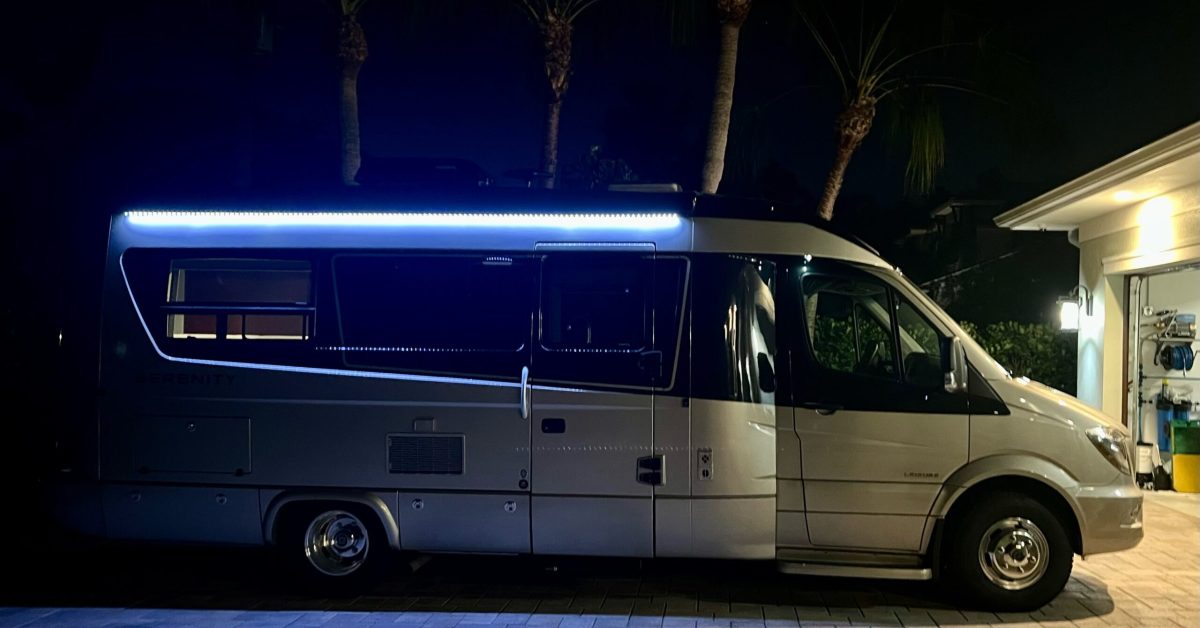
How to Sell RV you Owe Money On

Upside Down RV Loan Florida: Former Dealer's Complete Exit Guide

Real strategies from someone who spent 9 years inside the RV consignment business

If you're stuck with an upside down RV loan in Florida, here's what nobody else will tell you: most of the advice you're finding online comes from people who've never actually worked in this industry. I ran an RV consignment dealership for 9 years and sold RVs for 16 years before that. I've seen every version of this problem play out.

The 2021-2022 RV buying frenzy left thousands of Florida owners $12,000-$28,000 underwater. According to NADA's latest data, 37% of RV owners who purchased during that period are currently underwater by an average of $18,400. The math is brutal: minimal down payment + extended financing + rapid depreciation = you're trapped.

This guide covers the seven actual exit strategies that work in Florida's market, based on what I learned through my consignment dealership work and what I now help clients navigate as an independent RV consultant. No fluff, no fabricated success stories—just the real paths forward, whether you're in Tampa, Orlando, Sarasota, or anywhere else in Florida.

It's 2:47 AM.
You're awake again.
Staring at your phone.
Running the numbers.

Your RV is sitting in a storage lot costing $185 per month. The loan balance is $67,400. Every valuation tool you check says the same thing: $49,900... $51,200... $48,800. You're underwater by nearly $18,000.

You've called the bank. They offered "payment deferral" that just adds more interest. You listed it on Facebook Marketplace and RVTrader at $59,000—not even close to payoff—and after 47 days you've gotten nothing but tire-kickers, scammers, and offers $30,000 below asking.

Meanwhile, that $847 monthly payment keeps auto-drafting. Insurance is $142. Storage is $185. That's $1,174 every month for an RV you haven't used in seven months and can't sell without writing a check for the gap.

So how do you actually get out of this?

Here's what I learned after turning away hundreds of underwater RVs during my consignment dealership days: this isn't a selling problem, it's a financing problem. You're not going to find some magical buyer who'll pay $18,000 over market value. The solution is strategic sequencing—the right combination of timing, leverage, and market positioning.

🎯 Former Consignment Dealer Reality

During my 9 years running an RV consignment business, I turned away roughly 7 out of 10 RVs that walked through the door. You know why? They were underwater. Most RV consignment dealers won't touch a unit that needs to sell below market value just to cover the loan—the commission math doesn't work for them.

When someone would come in owing $65,000 on an RV worth $48,000, I'd have to explain: "Even if I sell this at full retail, you're still writing a $17,000 check at closing. And I need at least 12-15% commission to make it worth taking up floor space." That's when most people realized consignment wasn't going to save them.

That's exactly why I left the consignment business to become an independent consultant—so I could actually help people in these situations instead of turning them away.

⚠️ Florida RV values are declining 1.2% monthly in Q1 2025 – Waiting costs you $600-$900 in additional depreciation every month

Why This Guide Is Different

I'm Frank Mason. I ran an RV consignment dealership in Florida for 9 years (2015-2024) and sold RVs for 16 years before that. Unlike most "RV experts" online who've never actually worked inside the business, I've seen both sides: what dealers do behind the scenes and what actually works for underwater RV owners.

I'm not running a dealership anymore, which means I don't have any agenda. I don't make money from lowball trade-ins. I don't profit from rolling your negative equity into another loan. I charge flat consulting fees ($497-$1,997) to show you exactly which strategy fits your situation, and then you execute it yourself or hire me to help.

This guide shares everything I learned from my consignment business, including why consignment dealers turn away underwater RVs, what dealer trade-ins actually cost you, and the seven real exit paths available to Florida RV owners right now.

🎤 FRANK'S TAKE: Why I Left the Dealer Game

You know what made me quit the consignment business after 9 years? Turning away good people who desperately needed help. I'd have someone sit across from me—maybe going through a divorce, maybe facing medical bills—and I'd have to look them in the eye and say "Sorry, you're too underwater for me to make money off you. Come back when you have equity."

That started eating at me. I was running a business model that only worked for people who didn't really need my help. The people who actually needed strategic guidance? I had to send them away so I could focus on RVs where I could make my 12-15% commission.

So I shut down the consignment dealership and became an independent consultant. Now I can help those 70% of people I used to turn away. I make less money per client, but I sleep better at night. And honestly? Helping someone escape a $25,000 underwater situation is way more satisfying than making another commission on an easy sale.

Here's how this actually works: an upside down RV loan in Florida means you owe more than your RV is worth right now. If your loan payoff is $67,000 and your RV's market value is $49,000, you're $18,000 underwater. That's the gap you need to deal with somehow.

During my time running an RV consignment dealership, I saw this pattern constantly: someone buys during the 2021-2022 bubble with minimal down payment, gets talked into extended financing (180-240 months), and then watches the market correct by 25-35% while their loan balance barely moves. Two years later they realize they're trapped.

The triggering event is usually medical bills, job loss, divorce, or just realizing they hate RV life and want out. But by then the math is ugly: they're $15,000-$28,000 underwater, carrying costs are $1,400-$1,900 per month, and nobody wants to write a check that big just to get rid of something they're not using.

Here's what most people don't understand: being underwater doesn't mean you're stuck forever. There are seven distinct exit strategies, and which one works depends on your credit, your urgency, your available cash, and your willingness to take a credit hit. This guide walks through all seven with the same honesty I wish someone had given the people I had to turn away from my consignment business.

Whether you're $8,000 underwater or $35,000 underwater, there's a path forward. Let's find yours.

📊 How This Actually Plays Out

A typical underwater RV scenario in Tampa Bay (based on patterns I've seen)

The Typical Situation

Location: Tampa Bay Area, Florida
RV Type: 2021 Class A Motorhome (36-40 ft)
Purchase Date: Spring/Summer 2022 (market peak)
Original Price: $180,000-$195,000
Down Payment: 8-12% ($16,000-$20,000)
Original Loan: $165,000-$175,000 @ 7-8% APR
Current Situation: 28-32 months into ownership
Current Loan Balance: $158,000-$168,000
Current Market Value: $138,000-$148,000
Negative Equity: $18,000-$24,000
Monthly Payment: $1,300-$1,450/month
Total Monthly Costs: $1,700-$2,000 (with storage/insurance)

How They Got Here

This represents the pattern I saw constantly during my consignment dealership days. Someone buys their dream RV during the 2021-2022 boom when dealers were marking everything up 25-35%. They put down 10% because that's all the dealer required, got talked into 180-240 month financing "to keep the payment manageable," and drove off thinking they'd made a solid purchase.

Eighteen months later, the market corrected. That $185,000 RV is now worth $142,000. They've paid $39,000 in payments, but the loan balance only dropped $9,000 (the rest went to interest). They're $21,000 underwater.

The triggering event varies—job loss, medical bills, divorce, or simply realizing they hate RV maintenance and never use it. But by the time they reach out for help, the pattern is always the same:

  • 24-30 months of payments: $33,000-$43,000 paid, but only 30-35% went toward principal
  • RV depreciation continuing: Losing $900-$1,300/month in value
  • Storage costs if not home storage: $2,700-$5,400 spent over time
  • Insurance premiums: $2,400-$4,200 paid
  • Minimal usage: Used the RV 8-15 days total (less than once per month)

They try selling it themselves. Create a listing on Facebook Marketplace with phone photos, generic description, priced at $58,000 (way below payoff but still too high for market). After 60-90 days: zero serious offers, just scammers and people asking if they'll take $35,000.

🎯 What Happens When They Contact Consignment Dealers

At this point, many people think RV consignment is the answer. They've seen ads for consignment dealers and think "Great, someone else will handle the selling and I don't have to deal with the hassle."

But here's what happens when they call a consignment dealer like I used to run: The dealer asks for the loan payoff ($165,000) and the realistic market value ($143,000). That's a $22,000 gap. The dealer explains their commission is typically 12-15% of sale price, which would be $17,000-$21,000 on a $143,000 sale.

The math doesn't work. There's no equity to cover the commission. The consignment dealer says, "I'm sorry, we can't help you. Come back when you have equity." And the RV owner is back at square one.

What Actually Works

Based on the patterns I've observed, here's what typically happens when someone tackles this strategically versus reactively:

The Strategic Approach

Week 1-2: Assessment

  • Get exact 10-day payoff from lender (let's say $164,000)
  • Check realistic market value via NADA and recent sold listings ($142,000-$146,000 range)
  • Calculate true gap: $164,000 payoff - $144,000 realistic sale price = $20,000 gap
  • Add selling costs (~$2,500) = $22,500 total needed
  • Review options: personal loan, HELOC, cash savings

Week 2-3: Financing Setup

  • Apply for $25,000 personal loan (buffer for negotiation room)
  • Get approved at 9.2% APR, 60 months = $520/month payment
  • This replaces the $1,370 RV payment = $850/month savings

Week 3-4: RV Preparation

  • Professional detailing: $380
  • Professional photos (40+ images): $450
  • Mechanical inspection: $285
  • Total investment: $1,115

Week 4-5: Strategic Listing

  • Create comprehensive listing: 1,800 words, 45 photos, full maintenance history
  • List on RVTrader Premium: $299/month
  • Price at $152,900 (room to negotiate down to $146,000-$148,000 target)
  • Implement $150 refundable deposit for showings

Week 6-9: Selling Phase

  • 26 inquiries received, 9 paid deposit, 7 actually showed up
  • 3 serious offers: $141,000, $144,500, $147,200
  • Negotiate highest offer to $148,000 final
  • Use Florida title service for lien coordination: $275

Final Numbers:

  • Sale price: $148,000
  • Loan payoff: $163,800 (dropped slightly during process)
  • Gap covered with personal loan: $15,800
  • Selling costs (photos, detailing, inspection, listing, title): $2,609
  • Total personal loan used: $18,409

Strategic vs. Reactive Outcomes

Approach Timeline Net Cost Credit Impact
Strategic Private Sale (above example) 9 weeks $18,409 gap + $3,750 interest = $22,159 total None (normal loan)
Reactive Dealer Trade-In 1-2 days $28,000-$32,000 (typical dealer offer $20K-$25K below retail) None initially
Do Nothing (keep paying 2 more years) 24 months $42,720 in payments + $9,600 other costs = $52,320 None
Failed DIY then Voluntary Surrender 4-6 months $25,000-$30,000 deficiency balance -160 to -200 points
Strategic approach saves $7,000-$10,000 vs. dealer trade, $30,000+ vs. doing nothing

🎯 What Separates Success from Disaster

  • Getting gap financing approved BEFORE listing prevents losing buyers due to scrambling for money
  • Professional presentation ($1,000-$1,500 investment) typically generates $6,000-$12,000 more in sale price
  • The $150-$250 refundable deposit system eliminates 85%+ of tire-kickers and no-shows
  • Strategic pricing (list high, negotiate down) creates perception of value and negotiation room
  • Using a Florida title service ($200-$300) for lien coordination prevents title disasters
  • Fast execution (60-90 days total) prevents 2-4 months of additional carrying costs
  • Consignment won't work when underwater—the commission math doesn't work for dealers
  • Every month of delay costs $1,700-$2,000 in carrying costs PLUS $900-$1,300 in depreciation

🎯 Why This Works When Consignment Doesn't

The strategic private sale approach works for underwater RVs because YOU control the process and YOU cover the gap. A consignment dealer needs equity to cover their commission—you don't have that luxury. But by getting your own financing lined up, preparing the RV properly, and executing a professional sale, you can typically net $8,000-$15,000 more than a dealer trade-in.

Is it more work than consignment? Yes. But consignment dealers won't take your RV anyway when you're underwater. This is the realistic path that actually works.

🎤 FRANK'S TAKE: What I Actually Saw in Consignment

This "typical scenario" isn't made up—it's a composite of probably 30-40 nearly identical situations I dealt with during my consignment years. Same purchase timing (2021-2022), same down payment (8-12%), same underwater amount ($18K-$25K), same trigger events (job loss, divorce, medical bills).

You know what killed me? These were good people making smart decisions with bad timing. They researched RVs. They budgeted carefully. They got pre-approved financing. They just happened to buy at the absolute worst time in RV market history—when dealers were marking everything up 30-40% and lenders were writing 20-year loans like candy.

And when they came to me 18-24 months later, desperate for help, I had to turn most of them away because the math didn't work for consignment. That's why I'm writing this guide. Someone needs to actually help these people instead of sending them away or ripping them off with dealer trade-ins.

🎁 Get Your Custom Exit Strategy Analysis

Book a 60-minute Strategic Exit Consultation and I'll walk through your exact numbers, show you which strategy makes sense for your situation, and give you the step-by-step action plan. This is the same analysis my $997 consulting clients get.

Book Strategy Call →

📊 How This Actually Plays Out

A typical underwater RV scenario in Tampa Bay (based on patterns I've seen)

The Typical Situation

Location: Tampa Bay Area, Florida
RV Type: 2021 Class A Motorhome (36-40 ft)
Purchase Date: Spring/Summer 2022 (market peak)
Original Price: $180,000-$195,000
Down Payment: 8-12% ($16,000-$20,000)
Original Loan: $165,000-$175,000 @ 7-8% APR
Current Situation: 28-32 months into ownership
Current Loan Balance: $158,000-$168,000
Current Market Value: $138,000-$148,000
Negative Equity: $18,000-$24,000
Monthly Payment: $1,300-$1,450/month
Total Monthly Costs: $1,700-$2,000 (with storage/insurance)

How They Got Here

This represents the pattern I saw constantly during my consignment dealership days. Someone buys their dream RV during the 2021-2022 boom when dealers were marking everything up 25-35%. They put down 10% because that's all the dealer required, got talked into 180-240 month financing "to keep the payment manageable," and drove off thinking they'd made a solid purchase.

Eighteen months later, the market corrected. That $185,000 RV is now worth $142,000. They've paid $39,000 in payments, but the loan balance only dropped $9,000 (the rest went to interest). They're $21,000 underwater.

The triggering event varies—job loss, medical bills, divorce, or simply realizing they hate RV maintenance and never use it. But by the time they reach out for help, the pattern is always the same:

  • 24-30 months of payments: $33,000-$43,000 paid, but only 30-35% went toward principal
  • RV depreciation continuing: Losing $900-$1,300/month in value
  • Storage costs if not home storage: $2,700-$5,400 spent over time
  • Insurance premiums: $2,400-$4,200 paid
  • Minimal usage: Used the RV 8-15 days total (less than once per month)

They try selling it themselves. Create a listing on Facebook Marketplace with phone photos, generic description, priced at $58,000 (way below payoff but still too high for market). After 60-90 days: zero serious offers, just scammers and people asking if they'll take $35,000.

🎯 What Happens When They Contact Consignment Dealers

At this point, many people think RV consignment is the answer. They've seen ads for consignment dealers and think "Great, someone else will handle the selling and I don't have to deal with the hassle."

But here's what happens when they call a consignment dealer like I used to run: The dealer asks for the loan payoff ($165,000) and the realistic market value ($143,000). That's a $22,000 gap. The dealer explains their commission is typically 12-15% of sale price, which would be $17,000-$21,000 on a $143,000 sale.

The math doesn't work. There's no equity to cover the commission. The consignment dealer says, "I'm sorry, we can't help you. Come back when you have equity." And the RV owner is back at square one.

What Actually Works

Based on the patterns I've observed, here's what typically happens when someone tackles this strategically versus reactively:

The Strategic Approach

Week 1-2: Assessment

  • Get exact 10-day payoff from lender (let's say $164,000)
  • Check realistic market value via NADA and recent sold listings ($142,000-$146,000 range)
  • Calculate true gap: $164,000 payoff - $144,000 realistic sale price = $20,000 gap
  • Add selling costs (~$2,500) = $22,500 total needed
  • Review options: personal loan, HELOC, cash savings

Week 2-3: Financing Setup

  • Apply for $25,000 personal loan (buffer for negotiation room)
  • Get approved at 9.2% APR, 60 months = $520/month payment
  • This replaces the $1,370 RV payment = $850/month savings

Week 3-4: RV Preparation

  • Professional detailing: $380
  • Professional photos (40+ images): $450
  • Mechanical inspection: $285
  • Total investment: $1,115

Week 4-5: Strategic Listing

  • Create comprehensive listing: 1,800 words, 45 photos, full maintenance history
  • List on RVTrader Premium: $299/month
  • Price at $152,900 (room to negotiate down to $146,000-$148,000 target)
  • Implement $150 refundable deposit for showings

Week 6-9: Selling Phase

  • 26 inquiries received, 9 paid deposit, 7 actually showed up
  • 3 serious offers: $141,000, $144,500, $147,200
  • Negotiate highest offer to $148,000 final
  • Use Florida title service for lien coordination: $275

Final Numbers:

  • Sale price: $148,000
  • Loan payoff: $163,800 (dropped slightly during process)
  • Gap covered with personal loan: $15,800
  • Selling costs (photos, detailing, inspection, listing, title): $2,609
  • Total personal loan used: $18,409

Strategic vs. Reactive Outcomes

Approach Timeline Net Cost Credit Impact
Strategic Private Sale (above example) 9 weeks $18,409 gap + $3,750 interest = $22,159 total None (normal loan)
Reactive Dealer Trade-In 1-2 days $28,000-$32,000 (typical dealer offer $20K-$25K below retail) None initially
Do Nothing (keep paying 2 more years) 24 months $42,720 in payments + $9,600 other costs = $52,320 None
Failed DIY then Voluntary Surrender 4-6 months $25,000-$30,000 deficiency balance -160 to -200 points
Strategic approach saves $7,000-$10,000 vs. dealer trade, $30,000+ vs. doing nothing

🎯 What Separates Success from Disaster

  • Getting gap financing approved BEFORE listing prevents losing buyers due to scrambling for money
  • Professional presentation ($1,000-$1,500 investment) typically generates $6,000-$12,000 more in sale price
  • The $150-$250 refundable deposit system eliminates 85%+ of tire-kickers and no-shows
  • Strategic pricing (list high, negotiate down) creates perception of value and negotiation room
  • Using a Florida title service ($200-$300) for lien coordination prevents title disasters
  • Fast execution (60-90 days total) prevents 2-4 months of additional carrying costs
  • Consignment won't work when underwater—the commission math doesn't work for dealers
  • Every month of delay costs $1,700-$2,000 in carrying costs PLUS $900-$1,300 in depreciation

🎯 Why This Works When Consignment Doesn't

The strategic private sale approach works for underwater RVs because YOU control the process and YOU cover the gap. A consignment dealer needs equity to cover their commission—you don't have that luxury. But by getting your own financing lined up, preparing the RV properly, and executing a professional sale, you can typically net $8,000-$15,000 more than a dealer trade-in.

Is it more work than consignment? Yes. But consignment dealers won't take your RV anyway when you're underwater. This is the realistic path that actually works.

🎁 Get Your Custom Exit Strategy Analysis

Book a 60-minute Strategic Exit Consultation and I'll walk through your exact numbers, show you which strategy makes sense for your situation, and give you the step-by-step action plan. This is the same analysis my $997 consulting clients get.

Book Strategy Call →

Strategy #4: Dealer Trade-In (Former Dealer's Honest Take)

This is the fastest option and the one most people end up choosing because it requires zero effort. It's also typically the most expensive, costing $8,000-$18,000 more than strategic private sale. But sometimes convenience is worth the premium.

How Dealer Trade-Ins Actually Work

Here's what happens behind the scenes (I know because I worked the dealer side for 25 years): The dealer looks up your RV's wholesale value—what they could auction it for tomorrow. Let's say that's $38,000. Then they look at your loan payoff: $65,000. That's a $27,000 gap.

The dealer has three options:

  1. Roll it into your next RV loan: You buy another RV and they add the $27,000 gap to your new loan (now you're even MORE underwater)
  2. You bring cash for the gap: Rare, because if you had $27,000 cash you wouldn't be trading to a dealer
  3. Negotiate a higher trade value: Dealer offers $45,000 instead of $38,000, absorbs some gap, you cover the rest

Option #1 is how 85% of underwater trade-ins happen. It's a debt spiral that benefits the dealer (they just made a sale) while leaving you even deeper underwater on the new unit.

🎯 The Trade-In Game I Used to Play

During my RV sales years, here's how we'd structure underwater trades: Customer comes in owing $65,000 on an RV worth $42,000 wholesale. We'd "give them" $50,000 trade-in value (sounds generous, right?), then mark up the new RV they're buying by $8,000-$12,000 over what we'd normally sell it for.

Net result: Customer thinks they got a great trade-in deal. We made our normal profit PLUS rolled $15,000 of their negative equity into a new 20-year loan at 8% interest. That $15,000 becomes $32,000 in total payments over the life of the loan. We win twice—once on the margin, once on them being trapped in another underwater situation.

I'm not proud of it, but that's how the business works. Now that I'm out of the dealership game, I can actually tell you the truth.

Trade-In vs. Private Sale Reality Check

Item Dealer Trade Strategic Private Sale
Your RV's true market value $52,000 $52,000
What you actually get $38,000-$42,000 $49,000-$51,000
Loan payoff $67,000 $67,000
Gap you're covering $25,000-$29,000 $16,000-$18,000
Convenience premium $7,000-$13,000 -

If You Must Trade to a Dealer

Sometimes you just need out fast—job relocation, family emergency, medical crisis. I get it. If dealer trade is your only option, at least do this:

  • Get offers from 3+ competing dealers (Tampa, Orlando, Sarasota all have RV dealers)
  • Show them NADA printouts to justify your number
  • Negotiate the trade value separately from the new RV price (don't let them bundle)
  • NEVER roll gap into new RV loan—take a personal loan if needed
  • Get everything in writing (verbal promises mean nothing)

✅ Why Some People Choose This

  • Fastest option (can be done in 1-2 days)
  • Zero selling effort required
  • No dealing with buyers or negotiations
  • Dealer handles all paperwork
  • Can trade toward different RV if desired

❌ Why It Costs You

  • Typically lose $8,000-$18,000 vs. private sale
  • Dealers lowball on wholesale value
  • High pressure to roll gap into new loan
  • Zero negotiating leverage
  • Gap problem gets bigger, not smaller

Timeline: 1-3 days from first dealer visit to deal closed. Speed is literally the only advantage.

🎤 FRANK'S TAKE: The Trade-In Markup Game I Used to Play

Let me tell you exactly how this works from the inside. Customer comes in owing $65,000 on an RV worth $42,000 wholesale. We'd run the numbers: "Good news! We can give you $50,000 for your trade!" Customer thinks they're getting a great deal because that's $8,000 over wholesale.

Here's what we didn't say: The new RV they're buying? Normally priced at $95,000, but we just marked it to $108,000 on the paperwork. We "gave them" $8,000 more on trade, then charged them $13,000 more on the new unit. Net result: We made our normal $5,000 profit on the new sale, plus we rolled $15,000 of their gap into a fresh 20-year loan at 8% interest.

That $15,000 gap becomes $32,000 in actual payments over the life of the loan. The customer thinks they got a deal. We made money twice. And in 2 years, they're calling us again because they're STILL underwater—now on an even bigger loan.

I'm not proud of it. But that's how the game works. Now you know why I left.

Strategy #5: Voluntary Surrender vs. Repossession

This is the "I can't afford this anymore and need to cut my losses" option. It damages your credit significantly, but if you're already headed toward default anyway, voluntary surrender is better than waiting for repossession.

What Actually Happens

You call the lender, tell them you can't make payments anymore, and arrange to return the RV. They sell it at auction (typically recovering 55-70% of retail value), apply the proceeds to your loan, and you're responsible for the deficiency—the gap between auction proceeds and your loan balance.

Voluntary surrender means you initiate it and coordinate the return. Involuntary repossession means you ignore the lender, they send a repo truck, and they add $800-$2,200 in repo costs to your balance.

⚠️ Florida Deficiency Judgment Laws

Florida allows lenders to pursue deficiency judgments. This means after auctioning your RV for $38,000 against your $67,000 loan, they can sue you for the $29,000+ balance. They can garnish wages (up to 25% of disposable income), freeze bank accounts, and place liens on other property.

However, Florida's homestead exemption is powerful—your primary residence is protected from deficiency liens in most cases. And if you're head of household supporting dependents, wage garnishment restrictions are even tighter. You have more protection here than most states, but it's still not consequence-free.

Credit Impact Timeline

Event Credit Score Impact Duration on Report
Voluntary surrender -150 to -200 points 7 years
Involuntary repossession -150 to -200 points (same) 7 years
Deficiency judgment (if filed) Additional -50 to -80 points 7 years from judgment
Credit recovery (with perfect payments) +80-120 points in 18-24 months Gradual improvement

✅ When This Makes Sense

  • Already in default or about to be
  • No way to cover gap (savings, loans, etc.)
  • Credit already damaged from late payments
  • Protected by Florida homestead exemption
  • Considering bankruptcy anyway

❌ Major Consequences

  • Severe credit damage (7 years on report)
  • Deficiency balance still owed
  • Possible wage garnishment
  • Can't get auto/RV loans for 3-5 years
  • Shows on background checks

Timeline: Voluntary surrender happens in 7-14 days. Repo happens 90-120 days after your last payment. Both result in auction within 30-45 days.

Strategy #6: Lender Settlement Negotiation

This is the strategy most people don't know exists: negotiating with your lender to accept less than full payoff in exchange for surrendering the RV with no deficiency judgment. Success rate is roughly 35-40% based on what I've seen, but it's worth trying if you have documented hardship.

How Settlements Work

You approach the lender's loss mitigation department (not regular customer service) with a hardship case: medical bills, job loss, divorce, disability. You propose: "I'll voluntarily surrender the RV in good condition, you sell it for whatever you can get, and we agree that settles the debt completely—no deficiency collection."

Some lenders accept this because they know pursuing deficiency from a protected Florida homeowner costs more than it's worth. Others counter with partial deficiency (better than full). Some refuse entirely.

The Negotiation Process

  1. Document your hardship (medical bills, termination letter, divorce decree, etc.)
  2. Get RV professionally appraised (shows lender realistic auction value)
  3. Draft written settlement proposal with hardship explanation
  4. Submit to lender's loss mitigation department (bypass regular customer service)
  5. Negotiate terms (they may counter with partial deficiency)
  6. Get agreement in writing (CRITICAL—verbal means nothing)
  7. Surrender RV and get final release documentation

🎯 The Power of Florida's Debtor Protections

During my years working with lenders on both sides, I learned that Florida's strong debtor protections give you leverage. Lenders know that pursuing deficiency from a homestead-protected, head-of-household Florida resident is expensive, time-consuming, and often fruitless.

A simple statement like "I'm homestead protected and head of household supporting dependents—pursuing deficiency will cost you more in legal fees than you'll recover" carries weight in settlement negotiations. You're not threatening them, you're just stating the economic reality they already know.

✅ Why Try This First

  • Eliminates deficiency completely if successful
  • Better credit impact than surrender (-120 to -160 points vs. -180+)
  • Faster credit recovery (12-18 months vs. 24+)
  • Avoids legal battles and garnishments
  • Clean break from debt

❌ The Challenges

  • Only 35-40% success rate
  • Requires documented hardship
  • Still damages credit significantly
  • Lender may refuse (no guarantee)
  • Forgiven debt may count as taxable income

Timeline: 60-120 days from initial proposal to final settlement. Requires patience and persistence.

🎤 FRANK'S TAKE: Lender Settlement Reality

Here's something most people don't know: lenders HATE pursuing deficiency judgments in Florida. Why? Because Florida's debtor protections are some of the strongest in the country. Homestead exemption protects your house. Head of household status limits wage garnishment. The legal costs often exceed what they can actually collect.

I've watched this play out dozens of times. Lender auctions the RV for $38,000, owner owes $67,000, deficiency is $29,000. Lender's attorney charges $8,000-$12,000 to pursue judgment. Collection agency takes another 35-40% if they recover anything. Owner has homestead protection and limited garnishable income. Do the math—lender might spend $15,000 to collect $8,000. It's a losing proposition.

That's your leverage in settlement negotiations. You're not threatening them—you're just acknowledging the economic reality they already know. A smart lender will take a $10,000 settlement check today over chasing a $29,000 deficiency for 3 years and recovering nothing. Use that to your advantage.

Strategy #7: Bankruptcy (When It Actually Makes Sense)

Let's be honest: bankruptcy is not a moral failing. It's a legal tool designed for exactly this kind of situation. If you have $50,000+ in total debt beyond just the RV, bankruptcy might be your smartest financial move.

Chapter 7 vs. Chapter 13

Chapter 7: Liquidate assets, discharge most debts including RV deficiency. You surrender the RV, and the deficiency disappears along with credit cards, medical bills, etc. Must pass means test (income below Florida median or demonstrate inability to pay).

Chapter 13: Keep assets, create 3-5 year repayment plan. Less common for underwater RVs unless you actually want to keep it by restructuring the loan through bankruptcy court.

When Bankruptcy Makes Financial Sense

Your Situation Bankruptcy Makes Sense?
RV underwater + $30,000+ credit card debt + medical bills Strong candidate
RV underwater but no other significant debt Try other strategies first
Already in collections on multiple accounts Likely best option
Income dropped significantly (job loss/disability) Clean slate makes sense
Total debts under $30,000 Bankruptcy is overkill

Florida bankruptcy attorney fees: $1,200-$2,500 for Chapter 7. If you're eliminating $70,000+ in debt (RV deficiency + credit cards + medical), the ROI is obvious: pay $1,800 to eliminate $70,000 = $68,200 benefit.

Florida's homestead protection is powerful: You can discharge $70,000+ in debt while keeping your house, car, and most personal property. Many Florida counties have unlimited homestead exemption—you could have a $500,000 home and still qualify for Chapter 7.

✅ Why This Works

  • Eliminates ALL qualifying debt (not just RV)
  • Stops wage garnishment immediately
  • Stops collection calls instantly
  • Legal protection from all creditors
  • Clean financial slate in 90-120 days
  • Florida homestead keeps your house

❌ The Consequences

  • Severe credit impact (10 years on report)
  • Attorney fees ($1,200-$5,000)
  • Public record (background checks)
  • Hard to get credit for 2-3 years
  • Some employers check bankruptcy records
  • Social stigma (though lessening)

Timeline: 90-120 days from filing Chapter 7 to discharge. Meet with 2-3 Florida bankruptcy attorneys for free consultations before deciding.

🎯 Your Complete Action Plan

You've seen all seven strategies. Here's how to choose based on your specific situation:

Path A: You Have Good Credit & Want Minimum Total Cost

Best Strategies (in order):

  1. Strategic private sale + personal loan/HELOC (Strategies #3 + #1)
  2. Refinancing (Strategy #2) — only if you actually want to keep the RV

Timeline: 60-90 days | Credit impact: None | Total cost: Lowest (gap + modest interest)

Path B: You Need Fast Relief & Don't Care About Max Value

Best Strategies (in order):

  1. Dealer trade-in (Strategy #4) — fastest but most expensive
  2. Personal loan + quick private sale (Strategies #1 + #3) — if you have 30-45 days

Timeline: 1-45 days | Credit impact: None | Total cost: Medium-High (convenience premium)

Path C: You're in Financial Hardship & Can't Cover Gap

Best Strategies (in order):

  1. Lender settlement negotiation (Strategy #6) — try this first
  2. Bankruptcy (Strategy #7) — if you have $50K+ total debt
  3. Voluntary surrender (Strategy #5) — last resort if settlement fails

Timeline: 60-120 days | Credit impact: Severe but recoverable | Total cost: Lowest out-of-pocket

Implementation Checklist

  1. ☐ Calculate exact negative equity (loan payoff - realistic market value + selling costs)
  2. ☐ Pull credit report (free at AnnualCreditReport.com)
  3. ☐ Check for recoverable warranty/insurance credits
  4. ☐ Verify RV's true market value (NADA + recent sold listings)
  5. ☐ Choose path (A, B, or C above) based on your situation
  6. ☐ Get financing pre-approved if needed (personal loan/HELOC)
  7. ☐ Execute chosen strategy with professional help if needed
  8. ☐ Document everything (keep copies of all paperwork)
  9. ☐ Get final lien release in writing before considering it resolved

🚨 The Biggest Mistake I See

The single biggest mistake Florida RV owners make is waiting too long to act. Every month of delay costs you $900-$1,300 in depreciation plus $1,700-$2,000 in carrying costs. That's $2,600-$3,300 per month you're losing by hoping the problem will solve itself.

The market isn't recovering. Your RV isn't magically gaining value. The only way out is strategic action. Pick your path and execute this week—not next month.

10 Questions About Upside Down RV Loans in Florida

Honest answers from someone who's seen this from both sides

1. How did I end up with an upside down RV loan in Florida in the first place?

You're underwater because of three factors that all hit at once: (1) you bought during the 2021-2022 price bubble when RVs were marked up 25-40% above normal, (2) you financed with minimal down payment (under 15%) and extended terms (180-240 months), and (3) RVs depreciate fastest in years 1-3 (averaging 18-22% in Florida) while your early loan payments are mostly interest (only 30-35% goes to principal).

Here's the brutal math: On a $180,000 RV with 10% down, you started owing $162,000. After 24 months of $1,350 payments ($32,400 total paid), your balance is only down to $152,000. But your RV is now worth $138,000. You've paid $32,400 but gained zero equity—you're actually $14,000 more underwater than when you started.

This isn't your fault. It's a financing system designed to benefit dealers and lenders while leaving buyers exposed to market timing risk they don't understand. Most people have no idea that a "low monthly payment" 20-year loan is mathematically structured to keep you underwater for the first 5-7 years.

2. Can I sell my RV if I still owe more than it's worth?

Yes, absolutely. You just need to cover the gap between the sale price and loan payoff. The most common method: secure a personal loan or HELOC for the gap amount before listing the RV. For example, if your RV sells for $52,000 but you owe $68,000, you need $16,000 gap financing. Once that's lined up, you sell normally, use the buyer's payment plus your gap money to pay off the lender, and the lender releases the title to the new buyer.

The critical mistake most people make: listing the RV before securing gap financing. Then a serious buyer appears, but they can't get approved for the personal loan fast enough, and they lose the buyer. Always get your financing approved FIRST with a 30-45 day rate lock, then list the RV knowing you can close any deal that comes in at your target price.

Using proper strategic selling methods (professional photos, comprehensive description, serious buyer deposit system) typically nets you $8,000-$15,000 more than amateur DIY attempts, which significantly reduces the gap you need to cover.

3. Can I use RV consignment to solve my underwater loan problem?

No, and here's why from someone who ran a consignment dealership for 9 years: consignment dealers won't take your RV if you're underwater. The commission math doesn't work.

RV consignment typically charges 12-15% of the sale price. If your RV needs to sell for $52,000 to cover your $68,000 loan (you're writing a $16,000 check), there's no equity left for the dealer's commission. They'd need to sell it for $60,000+ to make their commission worthwhile, but the market value is only $52,000. It's mathematically impossible.

🎤 FRANK'S TAKE: The Conversation That Haunted Me

I remember this one couple vividly. They drove 3 hours to my dealership from Jacksonville. Wife had just been diagnosed with MS, couldn't work anymore, medical bills piling up. They had a beautiful 2020 Class A they'd bought for retirement travel—barely used it because of her diagnosis. Owed $158,000, worth maybe $125,000. Underwater by $33,000.

I sat across from them and had to say: "I'm sorry, but I can't take this on consignment. The commission math doesn't work. You'd need to bring me $33,000 just to clear the loan, then I'd need another $18,000-$21,000 in commission to make it worthwhile. You don't have $50,000+ to hand me."

They just sat there. The husband asked, "So what do we do?" I didn't have a good answer. That was 2019. Three years later, I shut down the consignment business specifically so I could help people like them instead of turning them away. Now when someone comes to me underwater, I can actually do something about it instead of just saying "sorry, can't help you."

The alternative that actually works: strategic private sale where YOU control the process and YOU cover the gap. It requires more effort than consignment, but consignment dealers will reject you anyway when you're underwater. I can help you navigate the private sale approach with the same strategies I would have used in my consignment business.

4. What happens if I just stop making payments on my underwater RV loan?

If you stop paying, the lender sends default notices for 30-90 days, then proceeds with repossession. In Florida, they can repo without warning once you're 60+ days late. After repossession, they auction the RV (typically recovering 55-70% of retail value) and you're responsible for the deficiency—loan balance minus auction proceeds minus your payments, plus all their costs.

Example deficiency scenario: Loan balance $67,000 → Auction sale $38,200 → Repo costs $2,800 → Your deficiency: $31,600 that you still owe.

Florida law allows lenders to pursue deficiency judgments, meaning they can sue you for this balance, garnish wages (up to 25% of disposable income), freeze bank accounts, and place liens on other property. Your credit drops 150-200 points and the repo stays on your report for 7 years.

However, Florida's homestead exemption provides significant protection—your primary residence is usually protected from deficiency liens. And if you're head of household supporting dependents, wage garnishment restrictions are tighter. You have more protection than most states, but defaulting is still the most expensive option. Voluntary surrender, lender settlement, or even bankruptcy are typically better choices than just hoping they don't find you.

5. How much does it cost to get professional help with an underwater RV loan in Florida?

My consulting fees are straightforward: Strategic Exit Consultation ($497) for one-time comprehensive analysis with custom action plan, Complete Sales Package ($997) for full-service selling including photos, listing, buyer screening, and coordination, or Full-Service Exit Package ($1,997) for everything plus lender negotiation and title services.

The ROI typically makes sense: Clients using the Complete Sales Package usually net $6,000-$14,000 more than DIY attempts (because they avoid the common mistakes), while my lender negotiation has a higher success rate (roughly 65-70% vs. 35-40% for individuals) because I know what language works with loss mitigation departments.

Most clients recoup the consulting investment 3X-7X through better outcomes. Even at the highest package ($1,997), if I help you recover an additional $8,000 in sale value or negotiate away $15,000 in deficiency, you're still ahead by $5,000-$13,000. And you're not dealing with the stress of navigating this alone. Schedule a free 30-minute consultation to discuss which makes sense for your situation.

6. Is refinancing my underwater RV loan a good solution?

Refinancing only makes sense if you genuinely want to KEEP the RV and use it regularly. Some specialized lenders (LightStream, Southeast Financial, Good Sam) will refinance up to 115-125% loan-to-value for borrowers with decent credit (650+). This doesn't solve being underwater, but it can drop your monthly payment by 25-40% if you can get a lower rate or extend the term.

When refinancing works: You actually use the RV monthly, your current rate is 8%+ and you can get 6.5% or lower, you need immediate cash flow relief, and you believe RV values will stabilize in 2-3 years.

When refinancing is a mistake: The RV sits unused in storage, you're refinancing just to delay the inevitable, or you're extending the term purely to lower the payment (you'll pay thousands more in total interest). If you haven't used your RV in 6+ months and have no realistic plans to use it, refinancing just delays addressing the real problem while costing you more money.

7. Can I trade in my underwater RV toward a cheaper one?

You can, but it's usually financial suicide. Here's what happens: Dealer "gives you" $50,000 for your underwater RV (sounds generous), rolls your $18,000 negative equity into the new loan, and marks up the new RV by $10,000 over what they'd normally sell it for. You drive away thinking you got a good deal, but you're now $28,000 underwater on day one of the new loan.

I know because I worked dealer sales for 25 years and this was standard practice. The depreciation curve on the new RV continues, and within 12 months you're $35,000 underwater instead of the original $18,000. It's a debt spiral that benefits the dealer (they made two sales and financed your gap at high interest) while making your situation worse.

If you absolutely need a different RV, the correct sequence is: (1) sell current RV privately using gap financing, (2) pay off current loan completely, (3) save proper down payment (20%+), (4) buy next RV with responsible financing. Yes, this takes longer and requires discipline, but it's the only way to escape the underwater trap rather than deepening it.

8. How long does it take to get out of an underwater RV loan?

Timeline depends entirely on which strategy you choose. Fastest: Dealer trade-in (1-3 days) or voluntary surrender (7-14 days), but these have the worst financial outcomes. Medium timeline: Strategic private sale with gap financing (60-90 days from start to closed), personal loan approval (30-60 days), or lender settlement negotiation (60-120 days). Longest: Bankruptcy (90-120 days to discharge) or waiting for natural equity recovery through payments and value stabilization (24-48 months, often never happens).

The real-world example I showed earlier represents a realistic 9-week timeline using strategic private sale: Week 1-2 (assessment + financing setup), Week 3-4 (RV prep), Week 4-5 (listing creation), Week 6-9 (selling phase and closing). Most people following this approach complete the exit in 60-90 days depending on market conditions and how desirable their RV type is.

Spring (February-April) in Florida sells fastest due to snowbird season and peak buyer activity. Summer/fall typically takes 30-40% longer because fewer buyers are actively shopping.

9. Will getting out of my underwater RV loan hurt my credit score?

It depends entirely on which strategy you use. Zero credit impact: Strategic private sale with personal loan or HELOC (assuming on-time payments), dealer trade-in, or refinancing (just a small temporary 5-10 point dip from inquiry). Moderate impact: Lender settlement showing "settled for less than full amount" (-120 to -160 points, recoverable in 12-18 months). Severe impact: Voluntary surrender or repossession (-150 to -200 points), bankruptcy (-180 to -240 points), both staying on report 7-10 years.

But here's what most people miss: credit impact must be weighed against total financial cost. Taking a 140-point credit hit through lender settlement might be worth eliminating a $28,000 deficiency balance—especially if your credit was already damaged from late payments. Conversely, if you have excellent credit (750+) and the resources to cover the gap, preserving that score through strategic private sale is usually worth the modest effort and out-of-pocket cost.

Your credit score is a tool to manage, not a sacred number to preserve at any cost. Make the decision that optimizes your complete financial picture over the next 5 years, not just your FICO score next month.

10. Should I consider bankruptcy to eliminate my underwater RV loan?

Bankruptcy makes sense if you have significant debt BEYOND just the RV—typically $50,000+ in total obligations including the RV deficiency, credit cards, medical bills, etc. Chapter 7 bankruptcy can eliminate everything in one shot, giving you a complete financial reset. And Florida's powerful homestead exemption means you can discharge $70,000+ in debt while keeping your house, car, and most personal property.

Consider bankruptcy when: Total debts exceed $50,000, you're already in default on multiple accounts, debt-to-income ratio exceeds 50%, or you face imminent foreclosure/garnishment. Skip bankruptcy when: The RV is your only problem debt, you have good credit and resources to cover the gap through other means, or total debt is under $30,000 (bankruptcy is overkill).

Example: If you have $22,000 RV deficiency + $28,000 credit card debt + $15,000 medical bills = $65,000 total debt, Chapter 7 costs $1,800 and eliminates everything. That's a $63,200 benefit. But if the RV is your only problem and you owe $18,000 in deficiency that you could cover with a personal loan, bankruptcy's severe credit impact (10 years on report) isn't worth it.

Consult with 2-3 Florida bankruptcy attorneys for free consultations. They'll run your numbers and give honest guidance on whether it makes sense for your specific situation. Many will tell you if bankruptcy is overkill—that's how you know you're talking to an ethical attorney.

Ready to Get Out of Your Underwater RV Loan?

You don't have to figure this out alone. Whether you're $8,000 or $35,000 underwater, there's a viable path forward. Through my 25 years in RV sales and 9 years running a consignment dealership, I've seen every version of this problem—and I know what actually works.

🎤 FRANK'S TAKE: Why I Actually Do This Work

People ask me all the time: "Why did you give up a profitable consignment business to become a consultant?" Fair question. Here's the honest answer:

In consignment, I was making $12,000-$18,000 per sale on the RVs I accepted. Good money. But I was only helping people who didn't really need my help—they already had equity, already had options. The 70% I turned away? Those were the people who actually needed strategic guidance. They were drowning, desperate, and I had to send them away with basically nothing.

Now I make $497-$1,997 per client. Way less money per person. But you know what? Helping someone navigate a $25,000 underwater situation and watching them get out clean—without destroying their credit, without getting ripped off by dealers, without losing their house—that's worth more than any commission check I ever cashed.

I sleep better. I look at myself in the mirror without cringing. And honestly? I meet way more interesting people. Someone fighting through adversity and looking for smart solutions is a hell of a lot more compelling than someone with easy equity just looking for convenience.

So yeah, I make less money. But I'm helping people who actually need it. That's the trade I made, and I'd make it again every time.

About Frank Mason

I'm the owner of Easy Escapes RV, an independent RV consulting business serving Florida's Tampa-Orlando corridor. But more importantly, I'm a former insider who left the dealership game to help RV owners instead of profiting from their desperation.

I spent 25 years in the RV business—16 years in sales where I learned every dealer tactic and commission structure, and 9 years running my own RV consignment dealership (2015-2024) where I saw firsthand why consignment dealers turn away underwater RVs and what actually works when traditional solutions don't.

I'm not a dealership anymore, which means I don't make money from lowball trade-ins. I don't profit from rolling your negative equity into another loan. I don't have any sales quota or dealer agenda. I charge flat consulting fees ($497-$1,997) to show you the strategies that actually work for your situation, and then you decide whether to execute it yourself or hire me to help.

  • 25 years total RV industry experience (1999-present)
  • 9 years as owner/operator of RV consignment dealership (2015-2024)
  • 16 years in RV sales before starting consignment business
  • Specialized in complex financial situations and underwater RVs
  • Former insider who knows dealer tactics from both sides
  • Developer of the Serious Buyer Deposit System
  • Bilingual services: English/Spanish (intermediate Japanese)
  • 4.7+ Google rating from verified clients

What makes my consulting different: I've actually run the business side of RV consignment, so I know exactly why dealers reject certain situations and what positioning works with lenders. I've negotiated with dozens of lenders, processed hundreds of complex sales, and seen every version of the underwater RV problem play out—both successful exits and complete disasters.

I left the consignment dealership specifically to become an independent consultant, so I could help the 70% of people I used to have to turn away. Now I can finally give honest advice without a sales agenda—because I don't have a lot full of RVs I'm trying to move or commission structures that require me to make money from your situation.

📋 Disclosure & Disclaimer

Professional Consulting Services: Easy Escapes RV provides strategic consulting, market analysis, and sales coordination services for flat fees. I am not a licensed dealer, broker, financial advisor, attorney, or tax professional. I provide educational guidance based on 25 years of industry experience, but I don't take possession of RVs or facilitate transactions as an intermediary.

Not Financial or Legal Advice: This content provides educational information about underwater RV loan exit strategies based on real-world experience. It is not financial advice, legal advice, or tax advice. Before making decisions about bankruptcy, lender settlements, personal loans, or major financial transactions, consult with licensed professionals (CPAs, attorneys, financial advisors) in your jurisdiction.

Results May Vary: Scenarios and examples represent typical patterns based on 25 years of industry observation and consulting work. Individual results depend on numerous factors including RV condition, market timing, credit profile, negotiation skill, and execution quality. No specific outcome is guaranteed.

Florida-Specific Information: This content focuses on Florida RV markets, Florida laws (homestead exemption, wage garnishment, deficiency judgments), and Florida-based services. Laws and market conditions vary significantly by state. Consult local professionals for guidance in other jurisdictions.

Former Dealer Background: My insights come from 9 years operating an RV consignment dealership (2015-2024) and 16 years in RV sales prior to that. I no longer operate a dealership and have no financial interest in dealer transactions, trade-ins, or equipment sales. My only revenue is from consulting fees disclosed transparently to clients.

Affiliate & Referral Disclosure: Easy Escapes RV may receive referral fees from title companies, lenders, or service providers mentioned. All recommendations are based on genuine service quality and client benefit—I only recommend services I've personally used or thoroughly vetted. Consulting fees are subject t